
Attorney News
-
 What Is Sexual Harassment at Work in New York? Meaning, Examples, and Employee Rights
 -
 Signs You Are Being Set Up to Be Fired After a Complaint
 -
 What Is Protected Activity in Whistleblower and Retaliation Claims?
 -
 Mediation vs. Arbitration vs. Lawsuit for a New York Sexual Harassment Case
 -
.png.2608210943505.webp) William K. Phillips Featured in "The Subtle Art of Leadership" Founder Spotlight
William K. Phillips Featured in "The Subtle Art of Leadership" Founder Spotlight -
 Should I Settle My Sexual Harassment or Retaliation Case at Mediation in New York?
 -
 What Happens When a Workplace Relationship Becomes Sexual Harassment in New York?
 -
.2).png.2605291409402.webp) William K. Phillips Answers Top Employee Questions About Workplace Relationships and Retaliation in New Connectively Article
William K. Phillips Answers Top Employee Questions About Workplace Relationships and Retaliation in New Connectively Article -
 William Phillips Featured in HackerNoon on SEO Strategies for the AI Search Era
 -
 William Phillips Featured in Forbes on Turning Purpose Into Smarter Business Decisions
 -
.png.2604211015206.webp) William Phillips Featured on Trustcast: What Employees Need to Know About Workplace Harassment and HR
William Phillips Featured on Trustcast: What Employees Need to Know About Workplace Harassment and HR -
 Featured in Lawyer Magazine: Sustainable Practice Tips for New Attorneys
 -
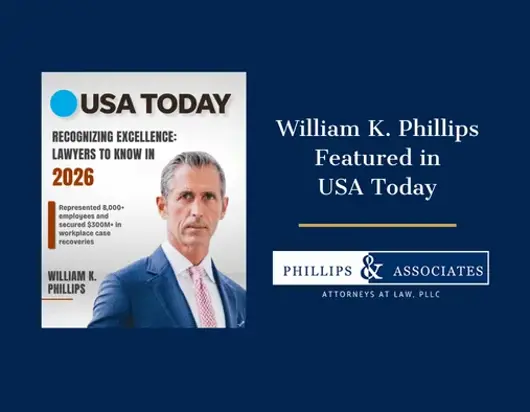 William K. Phillips recognized in USA Today’s “Lawyers to Know in 2026"
 -
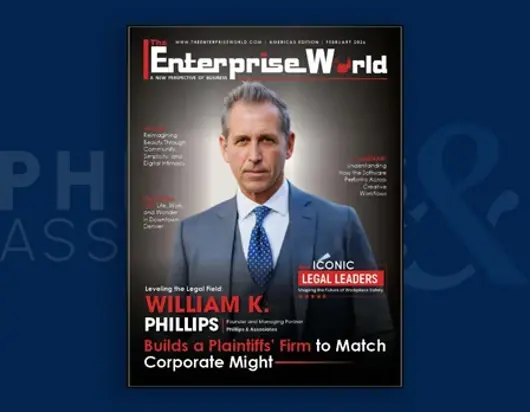 William K. Phillips Recognized as an Iconic Legal Leader in The Enterprise World
 -
 Phillips & Associates Team Featured in Authority Magazine
 -
 The Correction Phase: Stronger Accountability, Bigger Wins
 -
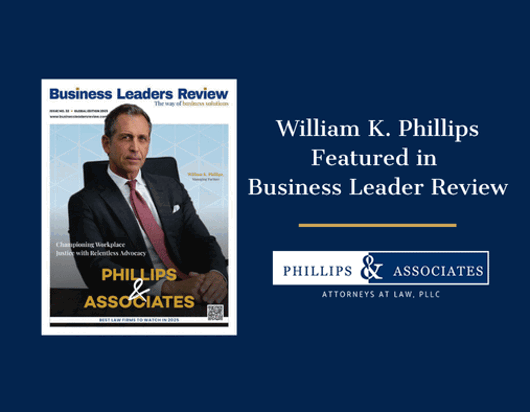 William K. Phillips Featured in Business Leader Review
 -
.2510141427064.png) Leaders in Law Names William Phillips Employment Discrimination Law Lawyer of the Year
Leaders in Law Names William Phillips Employment Discrimination Law Lawyer of the Year -
 Leaders in Law Profile on William K. Phillips
 -
.2510141410376.png) William K. Phillips Profiled in Lawyer Monthly
William K. Phillips Profiled in Lawyer Monthly
Podcast Feature


William Phillips
About
“Before there was #MeToo, there was Bill Phillips.” — Downtown Magazine
William K. Phillips is a New York employment lawyer who represents employees in sexual harassment, employment discrimination, retaliation, and whistleblower matters across New York and New Jersey. He is the Founder and Managing Partner of Phillips & Associates, where he represents employees exclusively in workplace misconduct cases involving supervisors, executives, and other individuals in positions of authority.
Phillips & Associates has handled more than 8,000 employment matters, litigated nearly 2,000 cases, and recovered over $360 million for employees.
His work focuses on cases where workplace misconduct is tied to power, control, and decision-making authority within an organization.
Practice Focus
William K. Phillips represents employees exclusively in:
- Sexual harassment
- Employment discrimination
- Retaliation, including whistleblower retaliation
- Hostile work environment claims
His practice focuses on workplace misconduct involving power imbalance, particularly in cases where employees are subjected to pressure, coercion, or adverse treatment by individuals with authority over their careers.
Who He Represents
William K. Phillips represents employees across a range of roles where power imbalance and direct access to decision-makers create risk, including:
- Executive assistants and personal assistants
- Administrative and support staff
- Hospitality and service industry employees
- Security professionals
- Legal professionals, including associates, partners, and paralegals
- Corporate employees across finance, healthcare, technology, and professional services
These individuals often depend on a single supervisor or leadership structure for compensation, advancement, and job security, giving that individual significant control over their employment.
Who the Harassers Typically Are
In many workplace sexual harassment and retaliation cases, the alleged misconduct involves individuals in positions of authority, including:
- Supervisors and direct managers
- C-suite executives and senior leadership
- Business owners and founders
- Law firm partners and senior attorneys
These dynamics are critical because legal liability and case value often depend on the level of authority and control the individual had over the employee.
Workplace Sexual Harassment and Power Imbalance
Workplace sexual harassment includes unwelcome conduct based on sex that affects employment decisions or creates a hostile work environment. This may include comments, touching, messages, texts and digital communications, or pressure tied to employment.
In many cases, the legal analysis focuses on power imbalance rather than intent, particularly where the conduct involves a supervisor or impacts job conditions.
Workplace Relationships and Retaliation Risk
A relationship between an employee and a supervisor may appear consensual but still raise legal issues when there is a power imbalance. When a supervisor has control over an employee’s compensation, job responsibilities, or advancement, the law evaluates authority and pressure, not just whether the relationship appeared voluntary.
Employees may also experience retaliation after a relationship ends, including negative performance evaluations, exclusion from opportunities, reassignment, or termination.
Legal Framework in New York
- Under the New York City Human Rights Law, sexual harassment by a supervisor can create employer liability
- Retaliation under the New York State Human Rights Law and Title VII can begin before termination
National Plaintiffs’ Summit on Sexual Harassment and Employment Discrimination
William K. Phillips is the Founder of the National Plaintiffs’ Summit on Sexual Harassment and Employment Discrimination, a national conference that brings together plaintiff-side employment lawyers, experts, and advocates from across the country to exchange strategies, share data, and advance litigation, case valuation, and accountability in workplace misconduct cases.
HarassmentHelp.org
William K. Phillips is the Founder of HarassmentHelp.org, a platform created as a project of Phillips & Associates to address the gap between experiencing workplace misconduct and taking action.
Studies consistently show that only a minority of employees who experience workplace harassment formally report it. In many cases, individuals are unsure whether the conduct is illegal, do not want to be labeled a “troublemaker,” or are concerned about retaliation or being excluded from future opportunities.
HarassmentHelp.org was developed to provide clear, practical information at an early stage, before employees decide whether to pursue legal action. The platform is built around the RGA framework: Rights, Guidance, and Action, a structured approach designed to help individuals understand their situation and make informed decisions.
The RGA Approach: Rights, Guidance, Action
- Rights — Understand Your Protections
Clear explanations of workplace protections under federal, New York, and New Jersey law, including what constitutes sexual harassment, discrimination, and retaliation - Guidance — Evaluate Your Situation Safely
Practical direction on documentation, reporting options, and risk assessment, allowing individuals to understand their position before taking formal action - Action — Take Next Steps With Support
Structured insight into how workplace misconduct claims are evaluated and the available paths forward, including internal reporting, legal consultation, or resolution strategies
Unlike a traditional law firm website, HarassmentHelp.org focuses on individuals who are still determining whether their experience rises to the level of workplace misconduct and what steps, if any, they should take next.
“Not in the (Company) Newsletter” Podcast
William K. Phillips is the creator of the “Not in the (Company) Newsletter” podcast, which brings together employment lawyers, psychotherapists, and individuals who have experienced workplace harassment to discuss real-world situations and how workplace misconduct unfolds.
The podcast focuses on sexual harassment, retaliation, and workplace power dynamics, providing practical insight into how these issues develop and how employees can evaluate their options.
Corporate Accountability and National Co-Counsel Litigation
In addition to his employment law practice, William K. Phillips works with national co-counsel teams on complex corporate accountability litigation, including product liability, toxic tort, and multi-district actions.
Through collaborations with established plaintiffs’ firms, he has contributed to cases involving pharmaceutical injuries, environmental exposure, consumer protection, and claims involving sexual misconduct and abuse.
This work reflects a broader focus on litigation involving systemic misconduct and institutional decision-making, both in workplace settings and in large-scale corporate actions.
Litigation Strategy and Approach
Phillips & Associates structures cases around:
- Early case valuation
- Strategic litigation positioning
- Trial readiness to increase leverage
Each client is represented by a team including a lead attorney, associate, and paralegal.
Awards & Recognition
- Best Lawyers in America – Best New York Labor & Employment Lawyers (2025-2026)
- Top 10 Best Labor & Employment Law Firms – Best of the Best Attorneys (2025-2026)
- Top 10 Employment Law Firms – Attorney & Practice Magazine (2025-2026)
- Lawyer of the Year – American Institute of Legal Professionals
- Lawyers of Distinction – Recognized Member (Employment and Labor Law)
- Million Dollar Advocates Forum and Multi-Million Dollar Advocates Forum Member
Professional Background
Before founding Phillips & Associates, William K. Phillips served as Vice President at Fieldstone Private Capital Group, a New York investment bank, where he managed international mergers, acquisitions, and restructurings in the aviation sector. He later led TPG Design, overseeing more than $17 million in real estate investments for his own account.
With a foundation in business strategy, finance, and negotiation, Phillips brings a distinct combination of corporate insight and litigation strategy to the representation of employees in sexual harassment, employment discrimination, and retaliation matters. His approach focuses on how organizations evaluate risk, how decisions are made internally, and where leverage exists in disputes involving workplace misconduct.
He is often retained in high-stakes matters involving supervisors, executives, business owners, and law firm partners, where power dynamics and control over an employee’s career are central to the case. Clients rely on his ability to navigate those dynamics, identify pressure points, and position cases to protect both their professional standing and long-term interests.
Education and Admissions
- St. Thomas University School of Law, J.D.
- New York Law School, Entertainment and Real Estate Law Studies
- College of Staten Island, B.A., Sociology and Anthropology, magna cum laude
Admitted to Practice:
New York State; U.S. District Courts for the Southern, Eastern, and Western Districts of New York; U.S. Court of Appeals for the Second Circuit
Professional Memberships
- Forbes Business Council
- American Bar Association
- National Employment Lawyers Association (NELA)
- New York State Trial Lawyers Association
- New York County Lawyers Association
- Brooklyn Bar Association
- American Society of Legal Advocates
- Lawyers of Distinction
- Million and Multi-Million Dollar Advocates Forum
Media and Thought Leadership
Phillips has been profiled in USA Today, Business Fortune, Business Leaders Review, Authority Magazine, Downtown Magazine, Lawyer Monthly, Medium, and Inside the Build. His commentary focuses on sexual harassment by supervisors, retaliation after rejecting advances, and power dynamics in workplace relationships.
“People in power have always used leverage to silence their victims. We are here to change that.”
— William K. Phillips
Beyond the Law
Outside the courtroom, Phillips supports the arts and education. He is a published fashion and portrait photographer and an avid athlete who enjoys weight training, swimming, tennis, and basketball. He divides his time between New York and Miami while mentoring the next generation of civil rights attorneys.
Common Questions About Sexual Harassment and Employment Law in New York
What does a sexual harassment lawyer do for employees in New York, and how do they handle workplace misconduct cases?
A sexual harassment lawyer in New York represents employees in matters involving workplace misconduct, including harassment by supervisors, retaliation, and hostile work environments. This includes evaluating whether the conduct violates the New York City Human Rights Law, the New York State Human Rights Law, and Title VII of the Civil Rights Act.
These cases often involve a power imbalance, particularly where a supervisor or executive controls compensation, advancement, or continued employment. A lawyer’s role includes assessing liability, preserving evidence, advising on internal reporting, and positioning the case to maximize legal and financial outcomes.
When should you speak with a lawyer about workplace sexual harassment or retaliation in New York?
Employees should consider speaking with an employment lawyer as soon as they experience conduct that appears inappropriate, crosses workplace boundaries, or involves a supervisor or decision-maker. In many cases, the most important step is understanding your rights and options before reporting the conduct internally or responding to a workplace investigation.
Early legal guidance enables individuals to assess risk, preserve evidence, and develop a strategy for handling the situation. This is particularly important in cases involving supervisors, executives, or senior leadership, where internal complaints can trigger retaliation, changes in treatment, or efforts to reframe the situation as a performance issue.
Speaking with a lawyer early can help avoid missteps, protect your position, and ensure that any action taken, whether internal or legal, is informed and deliberate.
What factors make a sexual harassment case strong under New York employment laws?
A strong sexual harassment case in New York typically includes clear documentation such as emails, text messages, or witness accounts, combined with evidence of power imbalance and impact on employment.
Under the New York City Human Rights Law, employees are not required to prove that the conduct was severe or pervasive. Liability may arise where an individual is treated less well because of a protected characteristic. Cases involving supervisors or executives often carry greater legal exposure for employers, particularly when the conduct affects compensation, job conditions, or advancement.
Consistency in the employee’s account, supported by surrounding facts and workplace dynamics, is often critical in establishing liability.
Can workplace retaliation occur before termination, and what does it look like in practice?
Yes. Retaliation can occur before termination and often begins with more subtle changes in the workplace. This may include negative performance evaluations, exclusion from meetings or opportunities, reassignment of responsibilities, reduced hours, or changes in how an employee is treated after raising concerns.
Under New York law, retaliation is prohibited when an employer takes action against an employee for reporting discrimination, opposing unlawful conduct, or participating in an investigation. The key issue is whether the employee’s protected activity leads to a negative change in the terms, conditions, or privileges of employment, even if the employee remains employed.
How do you choose the best sexual harassment lawyer in New York, and what factors matter?
Choosing a sexual harassment lawyer in New York should focus on factors that directly affect case outcomes, including whether the firm exclusively represents employees, has experience litigating against large employers, and is prepared to take cases to trial if necessary.
Lawyers who handle a high volume of harassment and employment discrimination cases are often better equipped to evaluate claims, identify legal exposure, and develop effective strategies. An important factor is the lawyer’s ability to assess case value early, including potential damages, employer liability, and litigation risk.
Resources also matter. Employers often retain large defense firms with significant financial backing and legal teams. A plaintiff-side firm must have the financial capacity, staffing, and litigation infrastructure to match that effort, including the ability to conduct discovery, take depositions, retain experts, and prepare a case for trial.
Trial readiness remains critical. Employers and defense counsel assess risk based on whether a case will be fully pursued. A lawyer’s ability to analyze power dynamics, preserve evidence, and position the case early can significantly affect both liability and settlement value.
How much is a sexual harassment case worth in New York, and what determines the value of a claim?
The value of a sexual harassment case in New York depends on several factors, including the severity and frequency of the conduct, the level of authority of the person involved, the impact on the employee’s career, and the strength of available evidence.
Cases involving supervisors or executives often carry higher value because of increased employer liability under laws such as the New York City Human Rights Law. Damages may include lost wages, emotional distress, and compensation for medical or psychological treatment.
Case value is also influenced by how the matter is positioned early, including documentation, consistency of the account, and the employer’s exposure if the case proceeds to litigation.
Do you need proof to bring a sexual harassment claim in New York, or is your testimony enough?
No. Employees do not need direct physical evidence to bring a sexual harassment claim in New York. A clear and consistent account of events, supported by surrounding facts, is often sufficient to establish liability.
This is particularly true under the New York City Human Rights Law, which has a lower threshold than federal law. Documentation such as text messages, emails, or witness observations can strengthen a claim, but cases are frequently evaluated based on credibility, context, and workplace dynamics.
Early documentation and a detailed timeline can significantly improve the strength of a case, even where formal evidence is limited.
What should you do if you are being sexually harassed at work in New York before reporting it?
If you are experiencing sexual harassment at work, one of the first steps is to understand your rights and options before taking formal action. Many employees choose to speak with a knowledgeable employment attorney who represents employees exclusively, particularly before reporting internally, to assess risk and determine the most effective strategy.
Documentation is also important. This includes preserving communications such as text messages, emails, and internal correspondence, and creating a clear timeline of events with dates, locations, and any witnesses.
This is especially important in situations involving supervisors, executives, or others in positions of authority, where internal complaints may lead to retaliation or changes in treatment. Early legal guidance can help employees protect their position, avoid missteps, and make informed decisions.
Why does power imbalance matter in sexual harassment and retaliation cases in New York?
Power imbalance matters because it changes how workplace conduct is evaluated under the law. When the person involved is a supervisor, executive, or decision-maker, they often control compensation, advancement, and continued employment.
Even conduct that may appear subtle, such as comments, messages, pressure, or changes in treatment, can carry legal significance because the employee may feel they cannot refuse or report the behavior.
Under the New York City Human Rights Law, an employee does not need to prove severe or pervasive conduct. Liability may arise if the employee is treated less well because of a protected characteristic. The presence of authority often increases employer liability and potential damages.
In practice, many cases turn on who had power, how that power was used, and whether it affected the employee’s job or opportunities.
Awards








Publications by William K. Phillips
Explore our attorneys’ published articles and thought leadership featured in respected legal and business publications, where they share insights, legal analysis, and practical guidance on today’s workplace and employment law issues.
-
 What Happens When a Workplace Relationship Becomes Sexual Harassment in New York?
 -
William K. Phillips Answers Top Employee Questions About Workplace Relationships and Retaliation in New Connectively Article
-
William Phillips Featured on Trustcast: What Employees Need to Know About Workplace Harassment and HR
-
Featured in Lawyer Magazine: Sustainable Practice Tips for New Attorneys
-
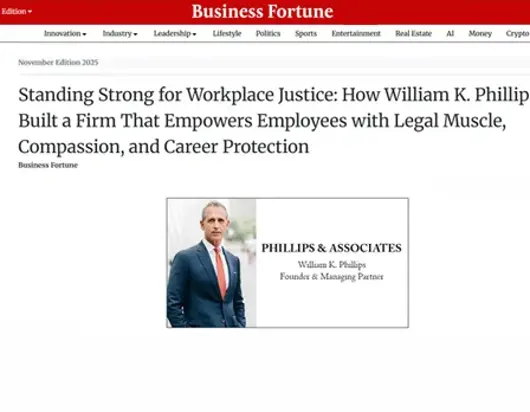
Standing Strong for Workplace Justice: How William K. Phillips Built a Firm That Empowers Employees with Legal Muscle, Compassion, and Career Protection
-
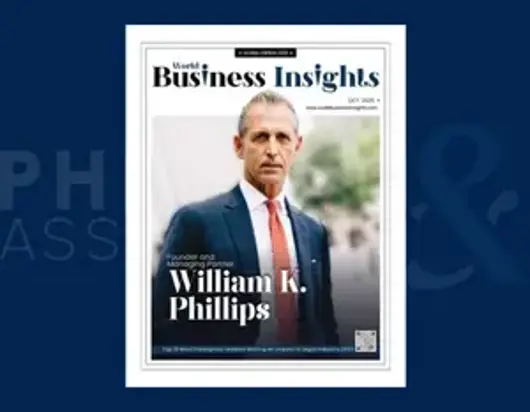
Top 10 Most Prestigious Leaders Making an Impact in Legal Industry, 2025
-
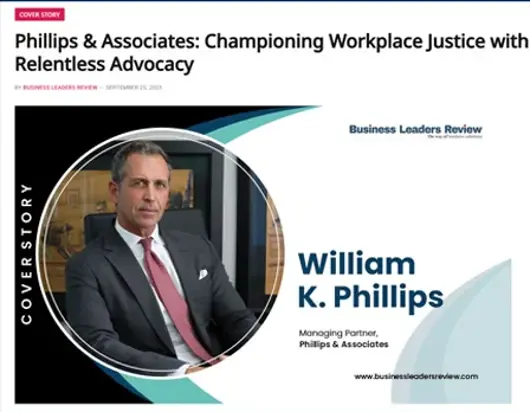
Phillips & Associates: Championing Workplace Justice with Relentless Advocacy
-
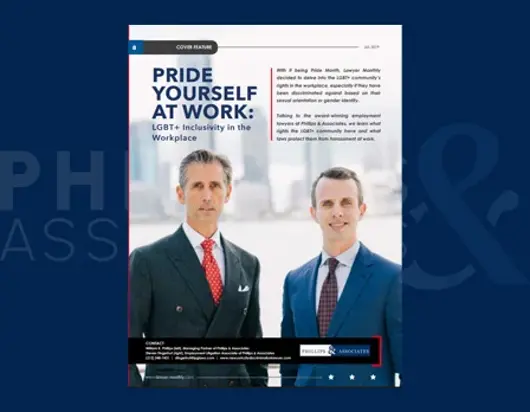
Lawyer Monthly: Pride Yourself at Work - LGBT+ Inclusivity in the Workplace

.2).png.2605291409402.webp)
.png.2604211015206.webp)